My original self-treatment program involved three phases. I won't be discussing the phases any more, instead I will focus on the main part of the program that deals with pain management.
Bicarbonate
 One of the functions of the pancreas is to produce bicarbonate. Bicarbonate has many uses that include regulating acid levels. If your pancreas is compromised, you aren't getting enough bicarbonate (if any). Acidity goes up which inflames the stomach and all organs in the vicinity.
Acidity is measured in pH. pH acronym means "potential of hydrogen". It is a scale from 0 to 14 where the lower the number, the higher the acidity. The higher the number, the higher the alkalinity. Various parts of our body need different levels of pH. For example, I have had discussions with medical personnel that stage the pH level is 7.4 and if it wavers more than 0.2 (meaning 7.2 to 7.6) you will die. That is true for serum blood pH levels. Your body closely monitors and regulates this. Your skin's pH is between 4.7 and 5.5 ... your body uses this high acidity level to help kills off bacteria and germs before it enters the body to cause more harm.
Your stomach and digestive system is also quite acidic - that helps your body digest foods. However, after many years of eating high-acidity foods, your stomach and other organs can reach levels of acidity that are too high. There are several ways you can measure this at home, using either saliva or urine. In your school science class, you were exposed to litmus paper (test strips) that measured the acidity and alkalinity of various science class liquids. It's the same scale and same process you can use to test your pH levels.
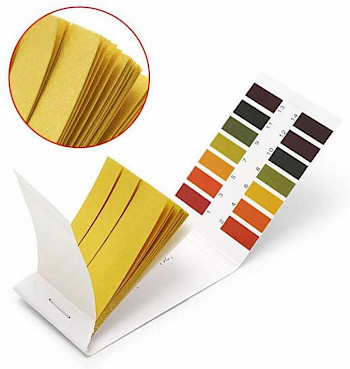 You can get test strips at your local health food store or order it online. It's quite inexpensive. When I first started measuring my pH levels in 2012, the highest pH level I reached was 5.4. Since it should have been 7.4, this indicates a considerably high acidic level. I do not test on saliva - depending on when you test, you could be skewing results based on the last meal or drink you had. It is more reliable to test urine.
If bicarbonate in the body regulates this pH level, I need to somehow stimulate production of bicarbonate internally. Wait, I have chronic pancreatitis, it isn't producing enough (if any) bicarbonate. So how can I add some?
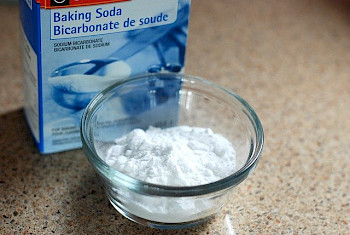
That's how I discovered the benefits of sodium bicarbonate. After countless hours of research, I decided to try sodium bicarbonate on myself. I always had low grade pain - hospitalization was required when it reached excruciating levels. We just happened to have a near empty box of sodium bicarbonate (baking soda) on hand. I took about 1/4 teaspoon in an 8 oz glass. Almost instantly, the low grade pain was gone. Totally and completely gone in a matter of seconds. If I could have video taped how fast I was in the car to get a new box, you would be amazed. I even remember the grocery store I went to. I bought the last box on the shelf.
Since my first initial report on this, sodium bicarbonate has been in short supply with many store shelves empty. I always buy 2 Kg boxes (at least two) to have on hand for many many months. (2 Kg = 4.4 lbs). Yes, I know 2 Kg is a lot of baking soda, but I also use it other ways too.
For internal use
What you have to remember is that baking soda will increase your pH with increases your alkalinity. Too high alkalinity is just as bad as too high acidity. If you take too much baking soda, you will improperly imbalance the pH levels. Your goal is to get as close to (or just slightly above) 7.4. For my own use, I have found that one level teaspoon in any given 24 hour period to work out perfectly. Others have found the same. The trick is how to do this and spread the benefits of the baking soda over that time span. You don't want to take 1 level teaspoon at once ...
I wanted to avoid the roller coaster effect of ups and downs of acidity. What worked for me when I started was to start with 1/8 level teaspoon every 1.5 to 2 hours, ending up the day having taken 1 level teaspoon full. I modified that, to make it a bit easier, to 1/4 level teaspoon four times a day ... still ending up with a maximum of 1 level teaspoon per day.
If you work outside the home, one suggestion is to prepare bottled water with sodium bicarbonate added the night before. Four bottles, each with 1/4 level teaspoon of sodium bicarbonate will get you through the entire day. Sip each bottle over a period of two to four hours, and there is your entire day.
Good luck!
Disclaimer: The content in this website is not intended to be a substitute for professional medical advice, diagnosis, or treatment. Always seek the advice of your physician or other qualified health provider with any questions you may have regarding a medical condition. Never disregard professional medical advice or delay in seeking it because of something you have read on this website.