Of course it's a play on words. It is The Great Falacy. By that, I mean the marketing of camera gear drives the constantly evolving feature sets to a ridiculous stratospheres.
Take, for example, the megapixel war. Nikon fired the first salvo with the Nikon D800 at 36.8 megapixels. When Nikon launched the D800 in 2011, medium format digital cameras were at 40 megapixels. The D800 was clearly nipping at the heels of the medium format world. (As you read this blog post, keep in mind this is geared to still photos. Check out the chart showing video resolution specs.)
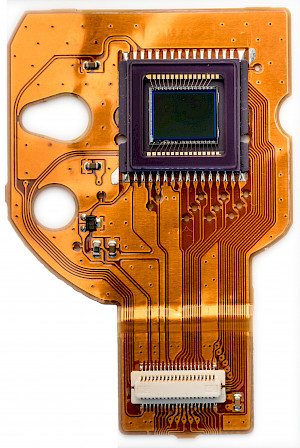 A photographer owning a medium format camera back then would not have been threatened by Nikon's launch. Medium format quality and dynamic range wasn't threatened.
But avid enthusiasts thought the D800 would get their photography close enough to that level at a more reasonable price. And it did – for avid enhusiasts and even some professionals. The pixel wars were on and so were the overall feature wars.
Do we really need all those megapixels? Do we need crazy high ISO? Do we need four and five digit price lenses? For a very small percentage of the market, yes, it's worth it to get photos in near-darkness. For the vast majority of avid enthusiasts, no, it is not necessary at all.
If we did, the photography market would be exploding with these new developments. The reality is that the market is dying. It's tanking under the weight of massive prices ... resulting in lower quantities of units.
The market is headed mainstream. There are more photos taken with the camera in a smart phone than any other type of device. Zoom is limited, ISO is limited, shutter speed is limited, aperture is very limited. Most of the "work" is handled by software processing in-camera. And these smart phones are doing a better job than all of the major camera manufacturers combined. Cameras like those included with the smart phone are generating acceptable images.
Yet, a good number of photographers buy into the race to features.
Each manufacturer has a different term to indicate anti-shake. Vibration Reduction (VR) from Nikon, Image Stabilization (IS) from Canon (and just about everyone else like Sony, Fujifilm). Almost every lens available today features image stabilization. Is image stabilization needed? Until recently, it was generally accepted that lenses above 70mm would benefit from the anti-shake technology. It would help with hand-holding ability and minimize the need for tripods. It would allow for lower shutter speeds / slower apertures / lower ISO. And it did. Anti-shake technology sold more lenses for manufacturers, so they kept introducing it to more lenses. Most photographers don't even understand the cost on battery drain and increased autofocus processing times. Read tutorials by the pros: shut off image stabilization at speeds over 1/500 seconds. Faster shutter speed means you don't need image stabilization.
Many of the marketing claims by camera manufacturers are pushing the boundaries of credibility and usability. In this post, I show examples of high ISO claims by Nikon (all manufacturers do it) with examples. Feature claims are not a reliable way to buy cameras.
Manufacturers are like everyone else, they are working diligently to increase sales and make profit. That's capitalism and encourages on-going innovation. Our task is to avoid the trap where we need to upgrade with each successive iteration of a camera or lens. Buy what we need, not what the manufacturers tell us to buy.
Whatever you do, ignore the local camera store salesman's advice. The days of consultative sales are long gone at camera stores – you'll get no better advice from a camera store than an electronics store with a camera counter staffed with a part-timer. In the area I live in, I've been to every camera store within a 50 Km range (and many outside that range). There isn't one single sales rep at any camera store that I would depend on for advice, none. And the manufacturers agree. Over the past decade or so, camera stores have abandoned the consultative sales process. That's where they hired sales reps with photography backgrounds to help other photographers choose the right gear. Now they have sales reps focused on selling as a process, with an emphasis on upselling. How do manufacturers recognize this isn't the right thing for photographers? By their licensing (or authorization). In the days of consultative sales, the only place to buy high-end enthusiast and professional cameras was the local camera store. If you wanted a Canon 5D, you could only get it through the local camera store. Electronics retailers, big box merchandise stores, and online sales were licensed to sell entry level and beginner type photography gear.
Today even Amazon is authorized and licensed to sell the full range of cameras from all manufacturers. And quite frankly, you get the same level of photographic expertise from looking at the website as you do at the local camera retailer sales counter. None or next to none.
Take your time. Buying a camera or upgrading is time to reflect on what your needs are, not on what the glib guy at a counter tells you. What the sales rep calls a game changer likely refers to how it is increasing his commisions and bonuses, not what it's doing for you, your photography hobby or photography career.
By the way, I started this article talking about the megapixel wars. I own a Nikon D850. 45.7 megapixels and I know it is overkill – there is absolutely no way on earth I need this kind of resolving power. Reason it appeals to me is for extreme crops. By my reckoning, I can crop around 4.5X to 5X and have a high quality image that I can use online or print up to 8x12.
Speaking of 8 X 12 ... do you know how many megapixels you need to get a good quality print? It's really simple to figure out. The photo printers max out at 300 dpi. And, dpi means dots per inch. One dot is one pixel. So, 8 inches is equivalent to 2400 pixels (300 X 8), and 12 inches is equivalent to 3600 pixels (300 x 12). An 8 x 12 then is 2400 x 3600 pixels, and that, my friends, is 8.6 mega pixels.